
Reducing packaging costs should not mean choosing the thinnest material or removing every protective feature. Poorly planned cost cutting can lead to damaged products, inconsistent printing, difficult assembly and higher replacement costs.
The better approach is packaging value engineering: identify which features protect the product or support the customer experience, then simplify everything that does not provide enough value.
This guide explains how to reduce packaging costs while maintaining the structural performance, appearance and consistency your product requires.
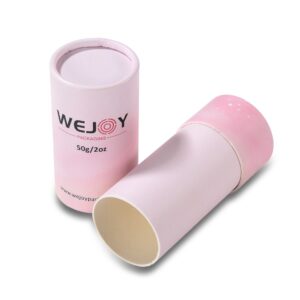
Table of Contents
- Define Quality Before Reducing Costs
- 1. Right-Size the Packaging
- 2. Standardize Structures Across SKUs
- 3. Optimize Materials Without Under-Specifying
- 4. Simplify Printing and Finishes
- 5. Redesign Inserts and Internal Components
- 6. Match the Printing Method to the Quantity
- 7. Plan MOQ and Order Frequency
- 8. Reduce Assembly and Packing Costs
- Packaging Cost FAQs
- Request a Packaging Cost Review
Define Quality Before Reducing Costs
Packaging quality is not simply the number of premium finishes applied to a box. Quality should be defined by the requirements of the product and supply chain.
Important quality criteria may include:
- Correct product fit
- Adequate compression and impact protection
- Reliable closure performance
- Consistent printing and brand colors
- Clear product and regulatory information
- Efficient assembly
- Suitable barrier performance
- Acceptable appearance after transportation
- Consistency between production batches
Separate these essential requirements from optional decorative preferences. This helps identify where costs can be reduced without creating unnecessary risk.
Before comparing options, understand the main factors affecting custom packaging costs.
1. Right-Size the Packaging
Oversized packaging increases more than material cost. It may also require larger inserts, more void fill, bigger shipping cartons and additional storage space.
Right-sizing begins with accurate product dimensions and weight. Consider:
- Product length, width, height or diameter
- Accessories packed with the product
- Required removal clearance
- Protective space around fragile areas
- Product orientation
- Retail shelf limitations
- Shipping carton dimensions
Do not remove all internal clearance simply to make the package smaller. The product still needs enough space for loading, removal and manufacturing tolerances.
A structural sample should be tested before confirming smaller dimensions.
2. Standardize Structures Across SKUs
Brands with several products often create a completely different package for every SKU. This can increase tooling, sampling, material and inventory costs.
Where practical, develop a shared structure for several related products and vary:
- Printed artwork
- Labels
- Color bands
- Inserts
- Product sleeves
- Internal dividers
For example, products with similar dimensions may use one outer carton with different inserts. A coordinated product family can also improve visual consistency.
Standardization should not force a fragile or poorly fitting product into an unsuitable package. Group products by dimensions and protection requirements before deciding which structures can be shared.
3. Optimize Materials Without Under-Specifying
The lowest-cost material is not always the most economical after transportation and product damage are considered.
Material optimization may involve:
- Reducing unnecessary board thickness
- Using a stronger structure with less material
- Replacing a rigid box with a folding carton where appropriate
- Selecting corrugated grades according to load requirements
- Removing unnecessary mixed-material layers
- Using kraft or uncoated paper when it matches the brand
- Comparing paperboard, rigid board and paper tube structures
Use our packaging materials guide to compare material functions before changing specifications.
For suitable products, custom paper boxes can provide efficient flat-packed structures. Custom paper tubes may be appropriate when cylindrical protection or presentation is required.
Material changes should be evaluated using samples and product testing rather than price alone.
4. Simplify Printing and Finishes
Premium appearance does not require every available finishing process.
Review whether the design really needs:
- Full-surface foil stamping
- Multiple foil colors
- Large spot UV areas
- Soft-touch lamination
- Embossing and debossing together
- Inside and outside full-color printing
- Specialty paper plus several additional finishes
A more cost-efficient design might use:
- One foil area instead of full coverage
- Printed metallic effects instead of foil where acceptable
- Strategic spot UV on the logo
- A distinctive uncoated or kraft paper
- Strong typography and color contrast
- One premium finish used as a focal point
The goal is to preserve the most recognizable brand element while removing processes that provide limited additional value.
5. Redesign Inserts and Internal Components
Inserts can represent a significant part of the package cost, especially when they require thick foam, flocking or several separate components.
Possible alternatives include:
- Die-cut paperboard inserts
- Folded paper platforms
- Corrugated dividers
- Molded pulp
- Fewer insert components
- One-piece locking structures
- Smaller support areas around critical product points
Do not remove an insert without checking product movement and drop protection. A well-designed paper insert may cost less than foam while still providing suitable positioning, but the correct option depends on product weight and fragility.

6. Match the Printing Method to the Quantity
Different quantities and artwork requirements may suit different printing methods.
Small or trial orders may benefit from digital printing because it can reduce setup requirements. Larger repeat orders may achieve better unit economics through offset, flexographic or gravure printing, depending on the packaging format.
Consider:
- Order quantity
- Number of artwork designs
- Frequency of artwork changes
- Color requirements
- Repeat-order plans
- Required print consistency
- Setup or tooling costs
Do not choose a process based only on the first-order unit price. Compare the setup cost, repeat-order pricing and expected design lifecycle.
7. Plan MOQ and Order Frequency
A larger quantity often reduces the packaging unit price, but ordering more than you can use creates storage and obsolescence risks.
Before increasing quantity, review:
- Monthly packaging consumption
- Product sales forecast
- Available warehouse space
- Artwork update frequency
- Regulatory or labeling changes
- Number of SKUs
- Seasonal demand
- Cash-flow requirements
Combining production for related SKUs may create efficiencies when the structures and materials are shared. However, separate artwork, printing plates or finishes may still produce additional costs.
The most economical quantity is not always the largest quantity—it is the quantity the business can use before the packaging becomes outdated.
8. Reduce Assembly and Packing Costs
A package with a low purchase price may still be expensive to use if it requires too much manual assembly.
Evaluate:
- Number of folding steps
- Time required to form each package
- Insert assembly
- Protective film removal
- Product loading speed
- Glue or tape requirements
- Packing errors
- Finished packaging storage
Auto-lock bottoms, pre-glued structures and simplified inserts may cost slightly more per unit but reduce packing labor.
Alternatively, flat-packed structures can reduce storage and freight volume, although the assembly time must still be considered.
Compare the complete packing cost rather than only the packaging purchase price.
Packaging Cost FAQs
What is the easiest way to reduce packaging costs?
Start with package dimensions, decorative finishes and master-carton efficiency. These areas may provide savings without immediately changing critical protection specifications.
Does using thinner material always reduce costs?
Not necessarily. Thinner material may cause crushing, deformation or product damage. Structure and material strength should be tested together.
Is sustainable packaging always cheaper?
No. Some material changes reduce weight or complexity, while others may increase the unit cost. Sustainability and cost should be evaluated using the complete package and supply chain.
Should I order a larger quantity to lower the unit price?
Only when demand, storage space and artwork stability justify it. Excess inventory can offset the lower unit price.
Can one packaging structure work for several products?
Possibly. Products with similar dimensions may share an outer structure while using different artwork or inserts. Every product should still be checked for fit and protection.
How should packaging quotations be compared?
Make sure every quotation uses the same dimensions, material thickness, printing, finishes, inserts, quantity, packing method and shipping terms. Otherwise, the lowest quotation may not represent the same package.
Request a Packaging Cost Review
Send us your current packaging specifications, product dimensions, estimated quantity, target market and the cost areas you want to improve.
We can review the structure, materials, finishes, inserts and packing method to identify practical opportunities without automatically reducing essential quality.
Need Custom Packaging for Your Product?
Share your product details, preferred packaging style and estimated
quantity. WeJoy Packaging can help with sizing, materials, structures,
artwork checking, samples and mass production.